TCKConnect
A Platform for Adult Third Culture Kids to Find a Sense of Belonging.
TCKConnect
A Platform for Adult Third Culture Kids to Find a Sense of Belonging.
TCKConnect
A Platform for Adult Third Culture Kids to Find a Sense of Belonging.
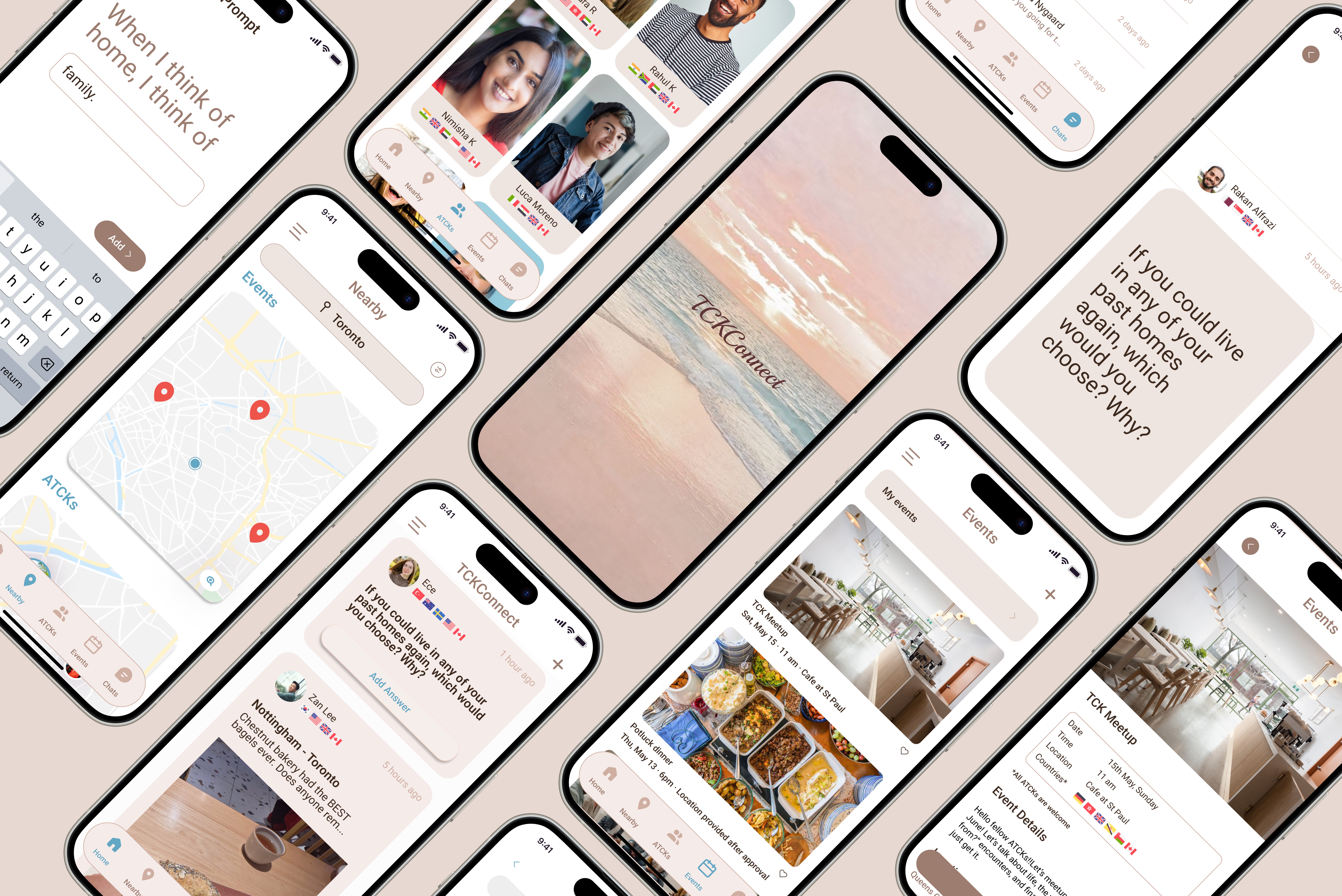
Overview
Overview
Overview
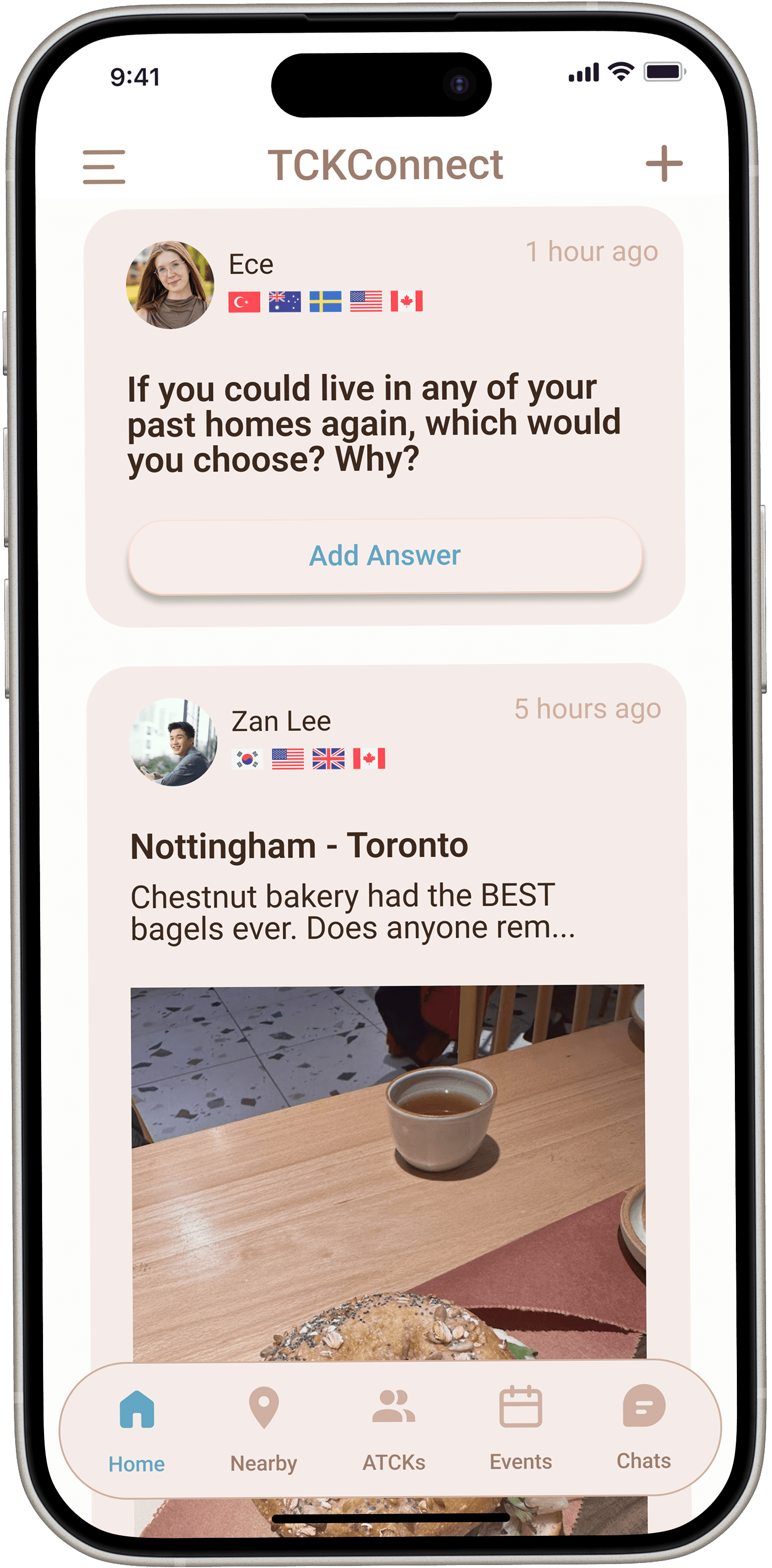
Share in a safe space
Homepage is where users can see others, posts, stories, and ask questions.
Share in a safe space
Homepage is where users can see others, posts, stories, and ask questions.
Share in a safe space
Homepage is where users can see others, posts, stories, and ask questions.
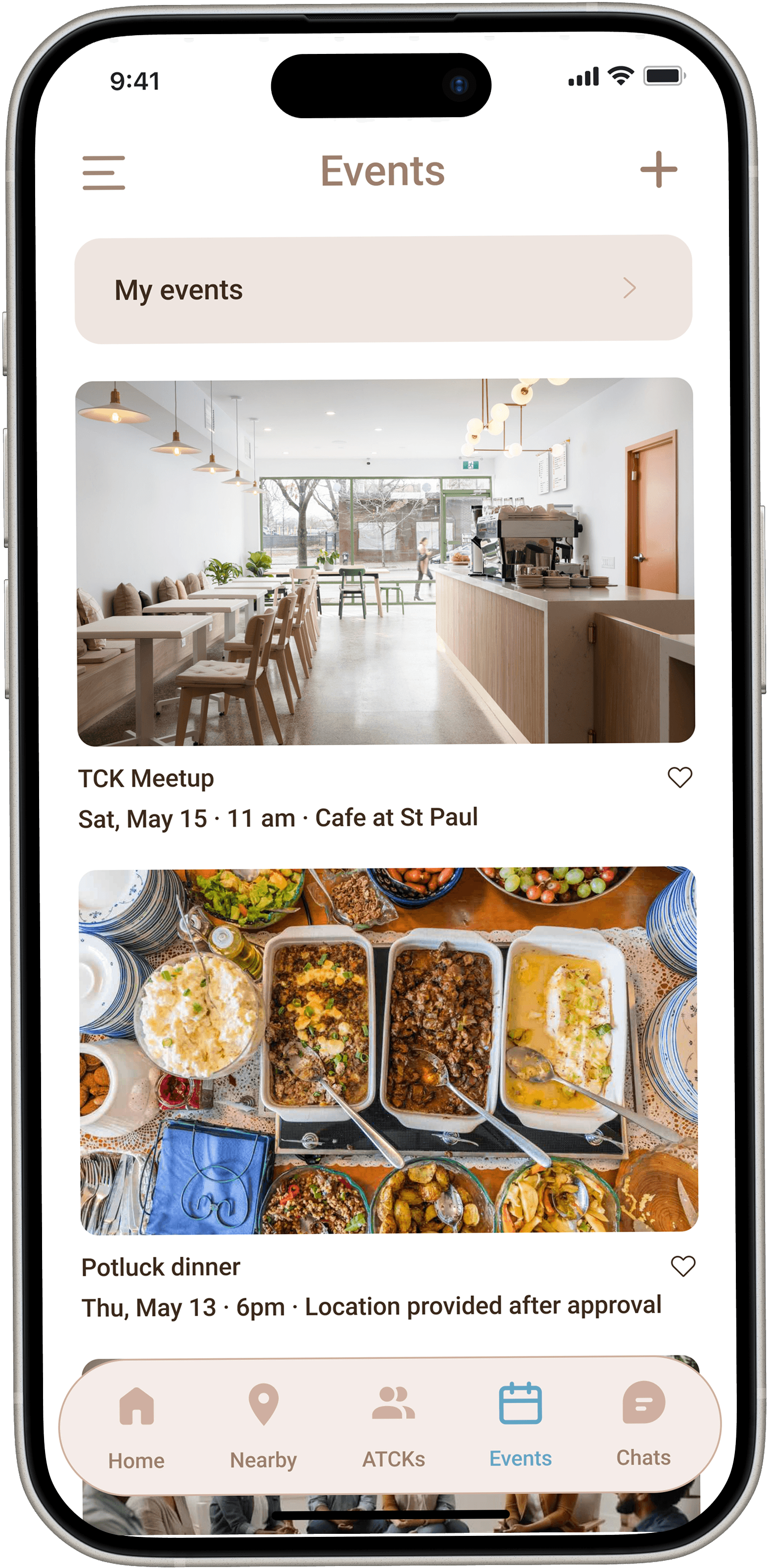
Events
Users can see list of events and sign up to meet fellow ATCKs.
Events
Users can see list of events and sign up to meet fellow ATCKs.
Events
Users can see list of events and sign up to meet fellow ATCKs.
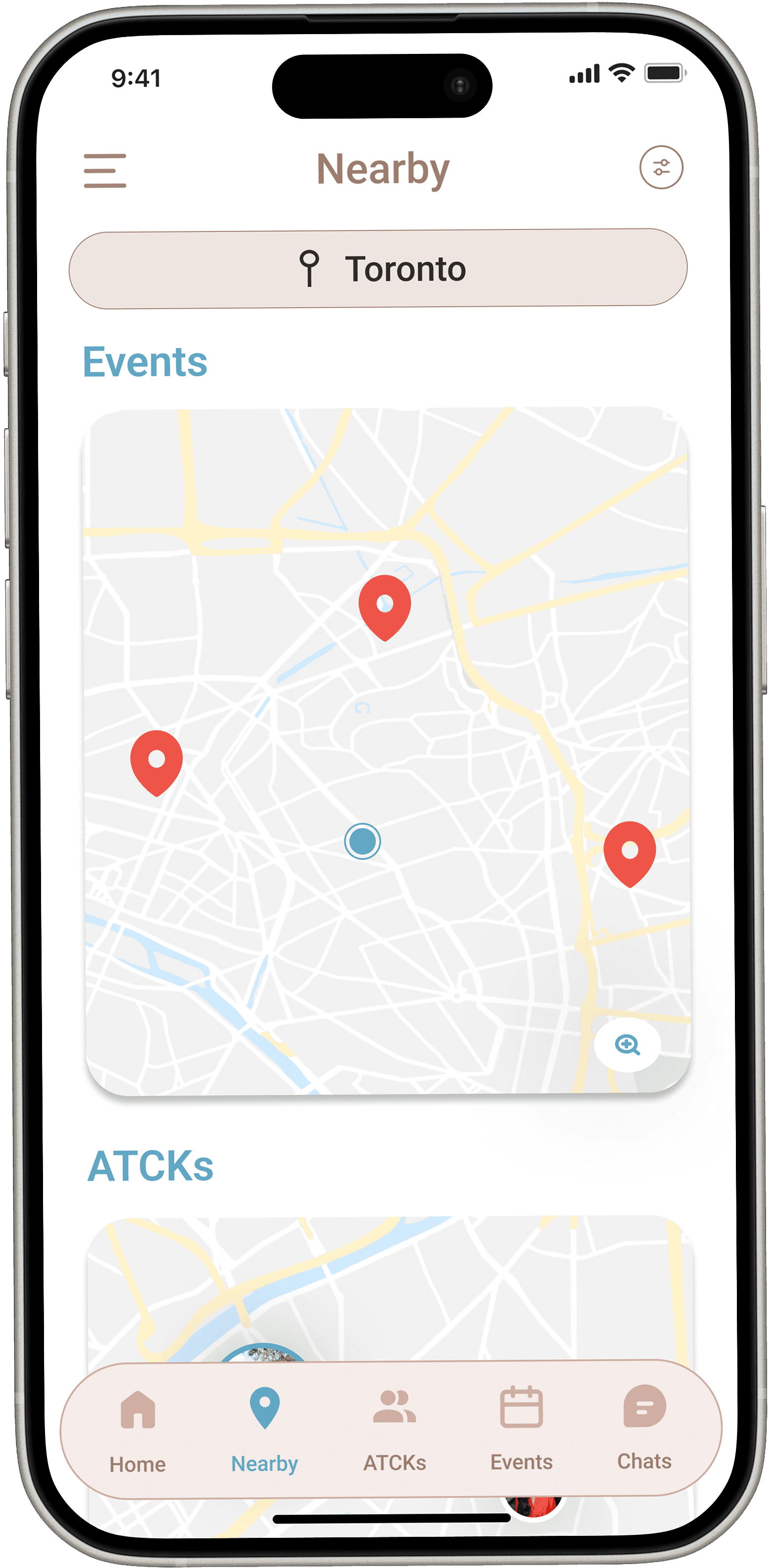
Nearby
The most liked feature, map view of all events happening nearby.
Nearby
The most liked feature, map view of all events happening nearby.
Nearby
The most liked feature, map view of all events happening nearby.
Methodology
Methodology
Methodology
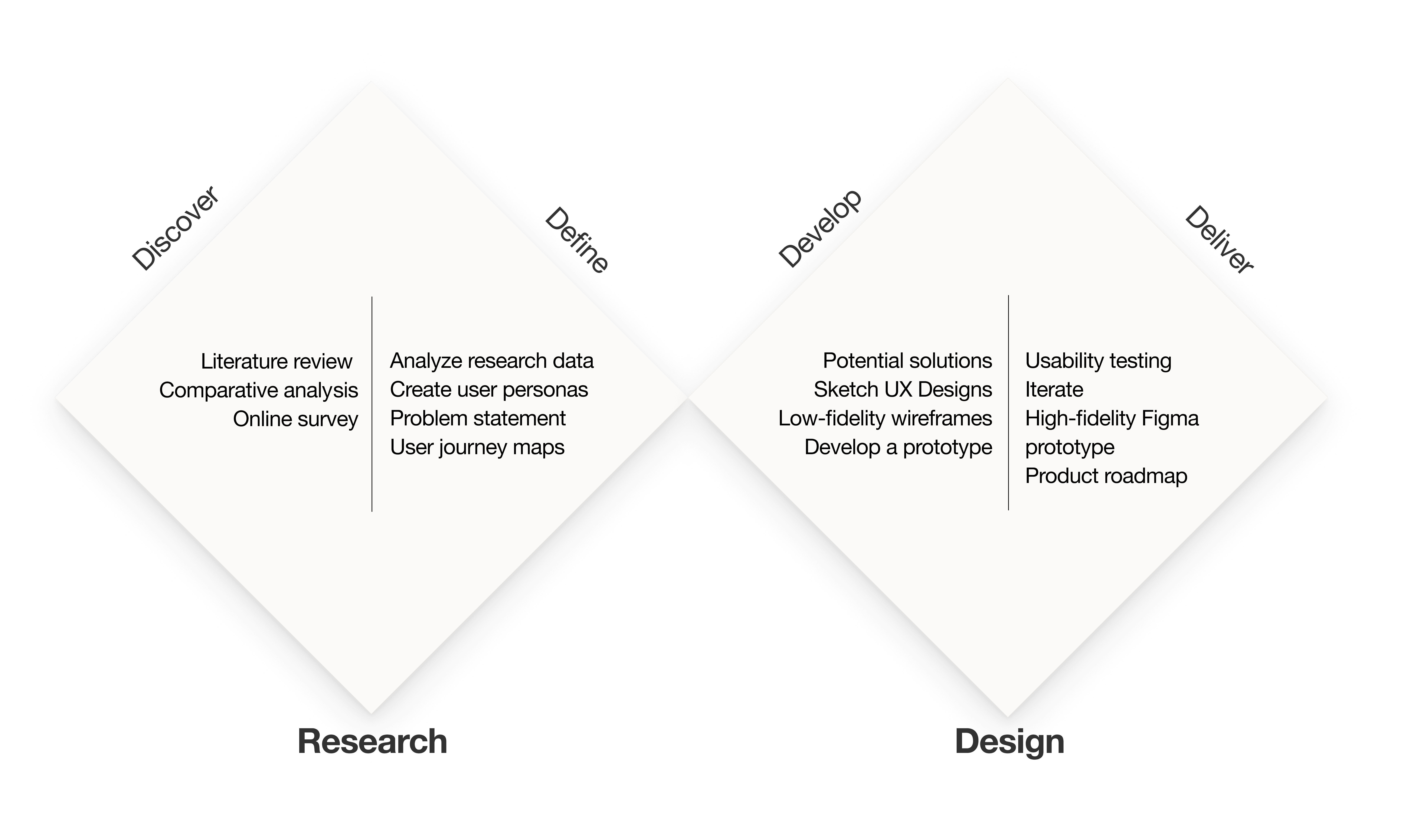
Discover
Discover
Discover
1. TCK Model
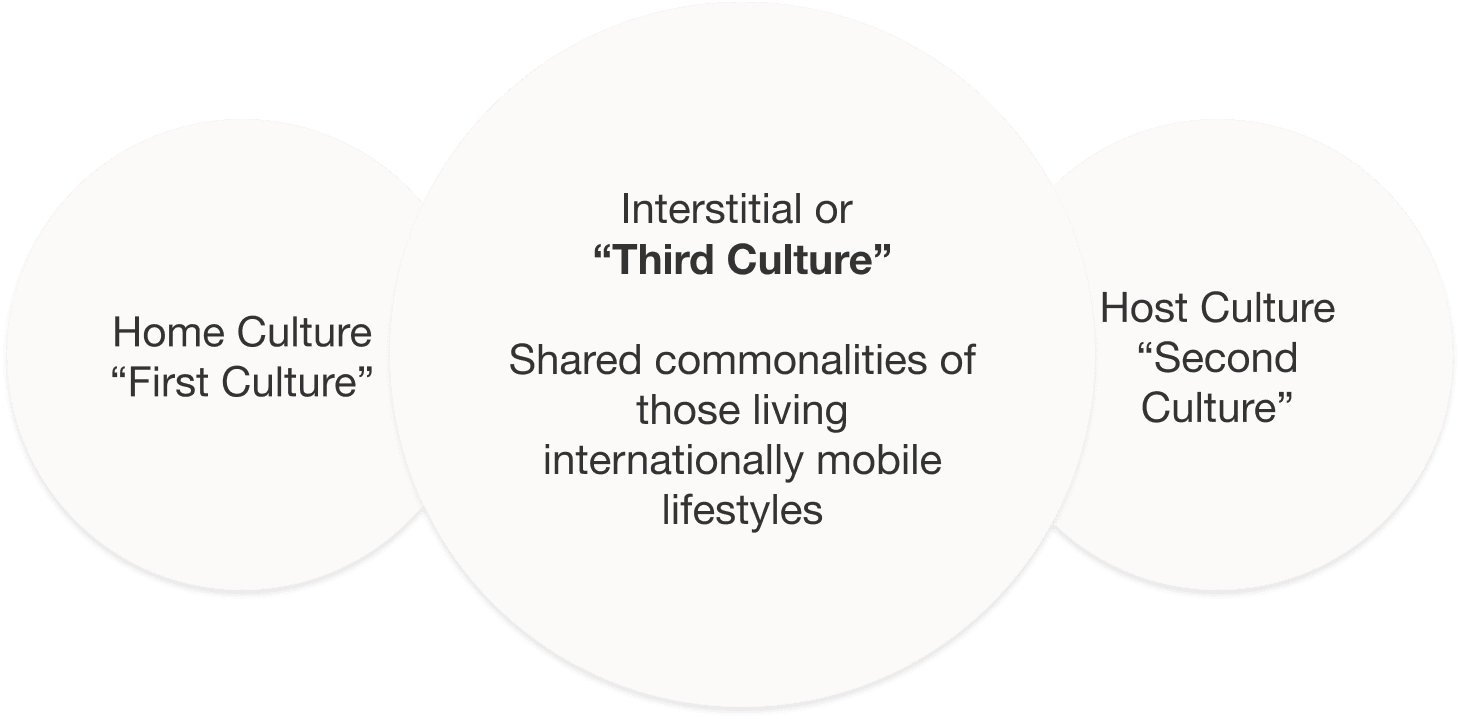
The "First Culture" or the home culture of TCKs is mostly the country their parents are from. The "Second Culture" or the host culture is the country (or countries) they grow up in. TCKs grow up in the mix of these cultures, also known as the "Third Culture"
2. How do they feel at home?
“The TCK builds relationships to all of the cultures, while not having full ownership in any. Although elements from each culture are assimilated into the TCK’s life experience, a sense of belonging is in relationship to others of similar background”.
- Pollock and Reken, 20013. Challenges they may face
Belonging
Whether it’s in their parents’ home country, or the country or countries they grew up in, TCKs may feel like outsiders.
Identity complexity
ATCKs experience extended periods of identity exploration, often into their early adult years, due to the transient nature of their upbringing and lack of a singular cultural belonging.
Rootlessness
“Everywhere but nowhere” phenomenon leads to a sense of rootlessness, with many ATCKs dreading the question “Where are you from?”
Hidden Immigrant Phenomenon
This describes individuals who, though they resemble locals in their passport country, feel like outsiders due to a lack of shared experiences.
1. TCK Model
The "First Culture" or the home culture of TCKs is mostly the country their parents are from. The "Second Culture" or the host culture is the country (or countries) they grow up in. TCKs grow up in the mix of these cultures, also known as the "Third Culture"
2. How do they feel at home?
“The TCK builds relationships to all of the cultures, while not having full ownership in any. Although elements from each culture are assimilated into the TCK’s life experience, a sense of belonging is in relationship to others of similar background”.
- Pollock and Reken, 20013. Challenges they may face
Belonging
Whether it’s in their parents’ home country, or the country or countries they grew up in, TCKs may feel like outsiders.
Identity complexity
ATCKs experience extended periods of identity exploration, often into their early adult years, due to the transient nature of their upbringing and lack of a singular cultural belonging.
Rootlessness
“Everywhere but nowhere” phenomenon leads to a sense of rootlessness, with many ATCKs dreading the question “Where are you from?”
Hidden Immigrant Phenomenon
This describes individuals who, though they resemble locals in their passport country, feel like outsiders due to a lack of shared experiences.
1. TCK Model
The "First Culture" or the home culture of TCKs is mostly the country their parents are from. The "Second Culture" or the host culture is the country (or countries) they grow up in. TCKs grow up in the mix of these cultures, also known as the "Third Culture"
2. How do they feel at home?
“The TCK builds relationships to all of the cultures, while not having full ownership in any. Although elements from each culture are assimilated into the TCK’s life experience, a sense of belonging is in relationship to others of similar background”.
- Pollock and Reken, 20013. Challenges they may face
Belonging
Whether it’s in their parents’ home country, or the country or countries they grew up in, TCKs may feel like outsiders.
Identity complexity
ATCKs experience extended periods of identity exploration, often into their early adult years, due to the transient nature of their upbringing and lack of a singular cultural belonging.
Rootlessness
“Everywhere but nowhere” phenomenon leads to a sense of rootlessness, with many ATCKs dreading the question “Where are you from?”
Hidden Immigrant Phenomenon
This describes individuals who, though they resemble locals in their passport country, feel like outsiders due to a lack of shared experiences.
1. TCK Model
The "First Culture" or the home culture of TCKs is mostly the country their parents are from. The "Second Culture" or the host culture is the country (or countries) they grow up in. TCKs grow up in the mix of these cultures, also known as the "Third Culture"
2. How do they feel at home?
“The TCK builds relationships to all of the cultures, while not having full ownership in any. Although elements from each culture are assimilated into the TCK’s life experience, a sense of belonging is in relationship to others of similar background”.
- Pollock and Reken, 20013. Challenges they may face
Belonging
Whether it’s in their parents’ home country, or the country or countries they grew up in, TCKs may feel like outsiders.
Identity complexity
ATCKs experience extended periods of identity exploration, often into their early adult years, due to the transient nature of their upbringing and lack of a singular cultural belonging.
Rootlessness
“Everywhere but nowhere” phenomenon leads to a sense of rootlessness, with many ATCKs dreading the question “Where are you from?”
Hidden Immigrant Phenomenon
This describes individuals who, though they resemble locals in their passport country, feel like outsiders due to a lack of shared experiences.
Social media serves as a source of community-building among people who share social and cultural affinities but with restricted opportunities for offline meetings.
- Otero & Schmidt, 2021Studies indicate that digital connections are most impactful when they can facilitate real-world meetings and community building.
- Not Another Social Media App, 2020
Face-to-face engagement fosters deeper emotional connections than online-only interactions.
- PMAC, 2021
Social media serves as a source of community-building among people who share social and cultural affinities but with restricted opportunities for offline meetings.
- Otero & Schmidt, 2021Studies indicate that digital connections are most impactful when they can facilitate real-world meetings and community building.
- Not Another Social Media App, 2020
Face-to-face engagement fosters deeper emotional connections than online-only interactions.
- PMAC, 2021
Social media serves as a source of community-building among people who share social and cultural affinities but with restricted opportunities for offline meetings.
- Otero & Schmidt, 2021Studies indicate that digital connections are most impactful when they can facilitate real-world meetings and community building.
- Not Another Social Media App, 2020
Face-to-face engagement fosters deeper emotional connections than online-only interactions.
- PMAC, 2021
Social media serves as a source of community-building among people who share social and cultural affinities but with restricted opportunities for offline meetings.
- Otero & Schmidt, 2021Studies indicate that digital connections are most impactful when they can facilitate real-world meetings and community building.
- Not Another Social Media App, 2020
Face-to-face engagement fosters deeper emotional connections than online-only interactions.
- PMAC, 2021
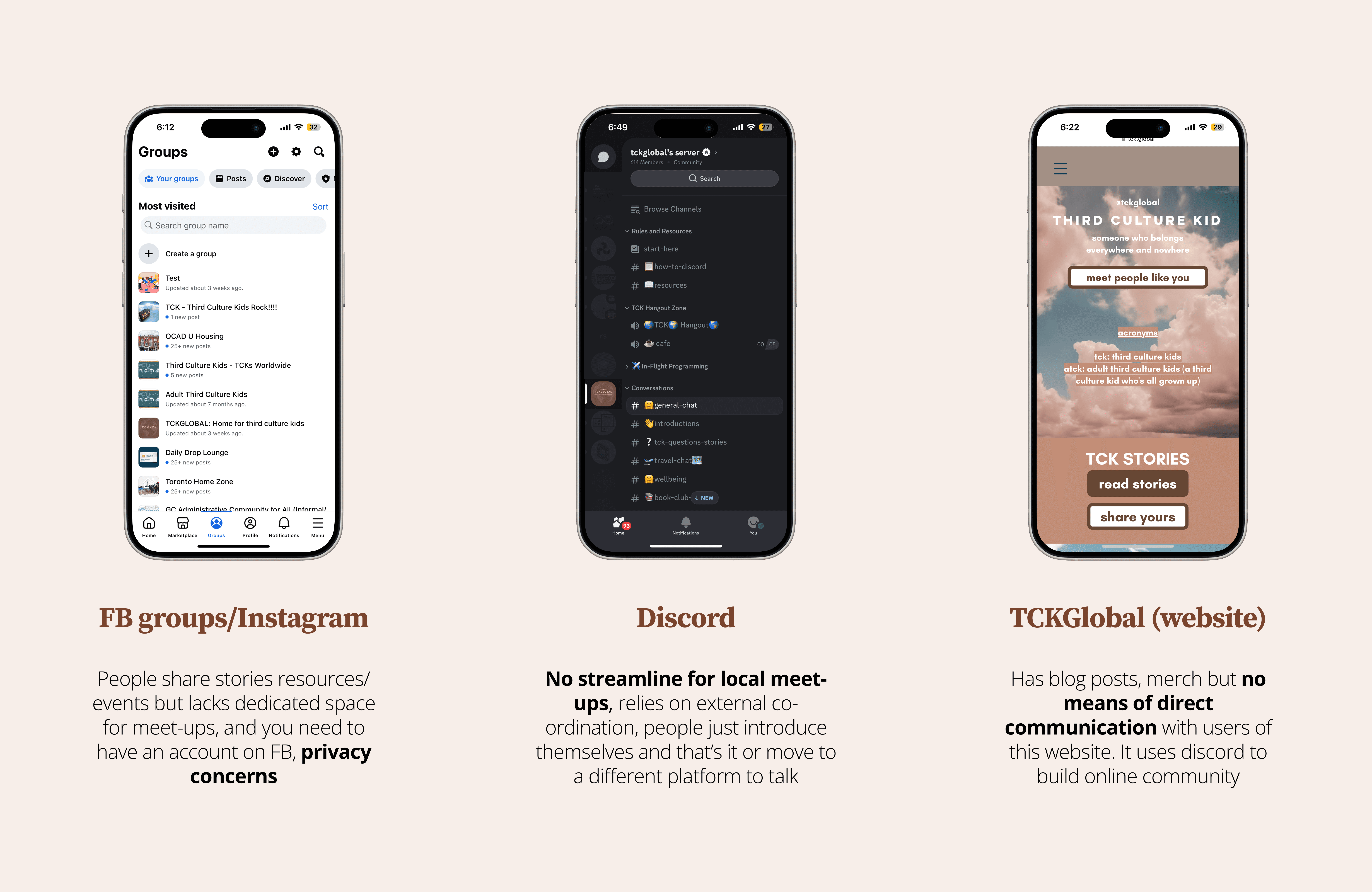
Social media serves as a source of community-building among people who share social and cultural affinities but with restricted opportunities for offline meetings.
- Otero & Schmidt, 2021Studies indicate that digital connections are most impactful when they can facilitate real-world meetings and community building.
- Not Another Social Media App, 2020
Face-to-face engagement fosters deeper emotional connections than online-only interactions.
- PMAC, 2021
Social media serves as a source of community-building among people who share social and cultural affinities but with restricted opportunities for offline meetings.
- Otero & Schmidt, 2021Studies indicate that digital connections are most impactful when they can facilitate real-world meetings and community building.
- Not Another Social Media App, 2020
Face-to-face engagement fosters deeper emotional connections than online-only interactions.
- PMAC, 2021
Social media serves as a source of community-building among people who share social and cultural affinities but with restricted opportunities for offline meetings.
- Otero & Schmidt, 2021Studies indicate that digital connections are most impactful when they can facilitate real-world meetings and community building.
- Not Another Social Media App, 2020
Face-to-face engagement fosters deeper emotional connections than online-only interactions.
- PMAC, 2021
Social media serves as a source of community-building among people who share social and cultural affinities but with restricted opportunities for offline meetings.
- Otero & Schmidt, 2021Studies indicate that digital connections are most impactful when they can facilitate real-world meetings and community building.
- Not Another Social Media App, 2020
Face-to-face engagement fosters deeper emotional connections than online-only interactions.
- PMAC, 2021
Choice overload
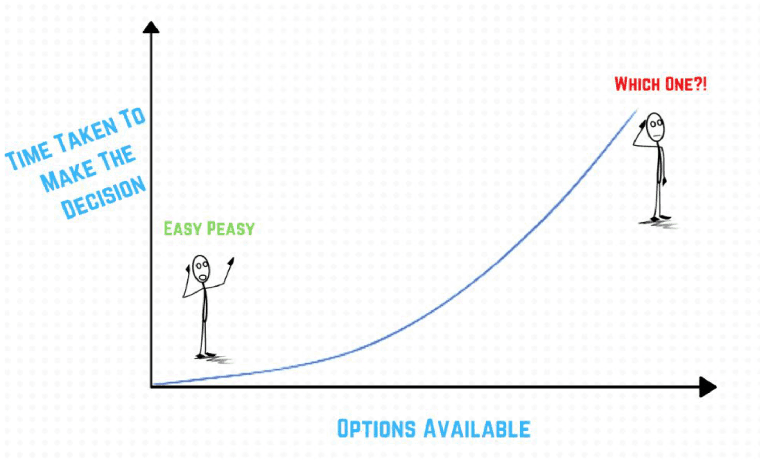
When faced with numerous options, decision-making slows significantly (Hick's Law). While variety initially feels empowering, excessive choices require more mental effort to compare and evaluate outcomes. Food delivery apps exemplify this with hundreds of restaurants and deals across multiple platforms, making selection slow and exhausting.
Define/Discover
Define/Discover
Define/Discover
Social media serves as a source of community-building among people who share social and cultural affinities but with restricted opportunities for offline meetings.
- Otero & Schmidt, 2021Studies indicate that digital connections are most impactful when they can facilitate real-world meetings and community building.
- Not Another Social Media App, 2020
Face-to-face engagement fosters deeper emotional connections than online-only interactions.
- PMAC, 2021
Social media serves as a source of community-building among people who share social and cultural affinities but with restricted opportunities for offline meetings.
- Otero & Schmidt, 2021Studies indicate that digital connections are most impactful when they can facilitate real-world meetings and community building.
- Not Another Social Media App, 2020
Face-to-face engagement fosters deeper emotional connections than online-only interactions.
- PMAC, 2021
Social media serves as a source of community-building among people who share social and cultural affinities but with restricted opportunities for offline meetings.
- Otero & Schmidt, 2021Studies indicate that digital connections are most impactful when they can facilitate real-world meetings and community building.
- Not Another Social Media App, 2020
Face-to-face engagement fosters deeper emotional connections than online-only interactions.
- PMAC, 2021
Social media serves as a source of community-building among people who share social and cultural affinities but with restricted opportunities for offline meetings.
- Otero & Schmidt, 2021Studies indicate that digital connections are most impactful when they can facilitate real-world meetings and community building.
- Not Another Social Media App, 2020
Face-to-face engagement fosters deeper emotional connections than online-only interactions.
- PMAC, 2021
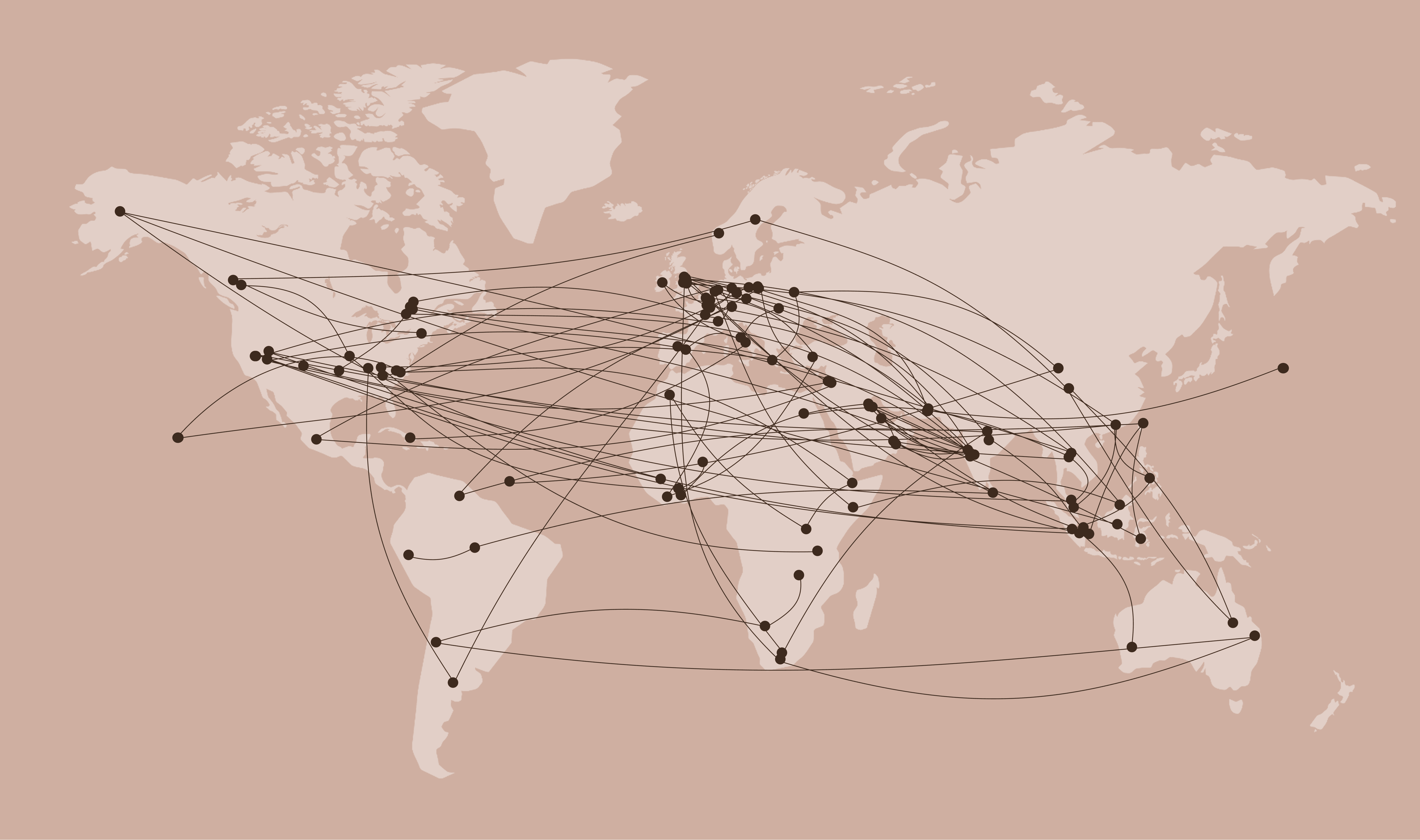
Social media serves as a source of community-building among people who share social and cultural affinities but with restricted opportunities for offline meetings.
- Otero & Schmidt, 2021Studies indicate that digital connections are most impactful when they can facilitate real-world meetings and community building.
- Not Another Social Media App, 2020
Face-to-face engagement fosters deeper emotional connections than online-only interactions.
- PMAC, 2021
Social media serves as a source of community-building among people who share social and cultural affinities but with restricted opportunities for offline meetings.
- Otero & Schmidt, 2021Studies indicate that digital connections are most impactful when they can facilitate real-world meetings and community building.
- Not Another Social Media App, 2020
Face-to-face engagement fosters deeper emotional connections than online-only interactions.
- PMAC, 2021
Social media serves as a source of community-building among people who share social and cultural affinities but with restricted opportunities for offline meetings.
- Otero & Schmidt, 2021Studies indicate that digital connections are most impactful when they can facilitate real-world meetings and community building.
- Not Another Social Media App, 2020
Face-to-face engagement fosters deeper emotional connections than online-only interactions.
- PMAC, 2021
Social media serves as a source of community-building among people who share social and cultural affinities but with restricted opportunities for offline meetings.
- Otero & Schmidt, 2021Studies indicate that digital connections are most impactful when they can facilitate real-world meetings and community building.
- Not Another Social Media App, 2020
Face-to-face engagement fosters deeper emotional connections than online-only interactions.
- PMAC, 2021
1. TCK Model
The "First Culture" or the home culture of TCKs is mostly the country their parents are from. The "Second Culture" or the host culture is the country (or countries) they grow up in. TCKs grow up in the mix of these cultures, also known as the "Third Culture"
2. How do they feel at home?
“The TCK builds relationships to all of the cultures, while not having full ownership in any. Although elements from each culture are assimilated into the TCK’s life experience, a sense of belonging is in relationship to others of similar background”.
- Pollock and Reken, 20013. Challenges they may face
Belonging
Whether it’s in their parents’ home country, or the country or countries they grew up in, TCKs may feel like outsiders.
Identity complexity
ATCKs experience extended periods of identity exploration, often into their early adult years, due to the transient nature of their upbringing and lack of a singular cultural belonging.
Rootlessness
“Everywhere but nowhere” phenomenon leads to a sense of rootlessness, with many ATCKs dreading the question “Where are you from?”
Hidden Immigrant Phenomenon
This describes individuals who, though they resemble locals in their passport country, feel like outsiders due to a lack of shared experiences.
Social media serves as a source of community-building among people who share social and cultural affinities but with restricted opportunities for offline meetings.
- Otero & Schmidt, 20211. TCK Model
The "First Culture" or the home culture of TCKs is mostly the country their parents are from. The "Second Culture" or the host culture is the country (or countries) they grow up in. TCKs grow up in the mix of these cultures, also known as the "Third Culture"
2. How do they feel at home?
“The TCK builds relationships to all of the cultures, while not having full ownership in any. Although elements from each culture are assimilated into the TCK’s life experience, a sense of belonging is in relationship to others of similar background”.
- Pollock and Reken, 20013. Challenges they may face
Belonging
Whether it’s in their parents’ home country, or the country or countries they grew up in, TCKs may feel like outsiders.
Identity complexity
ATCKs experience extended periods of identity exploration, often into their early adult years, due to the transient nature of their upbringing and lack of a singular cultural belonging.
Rootlessness
“Everywhere but nowhere” phenomenon leads to a sense of rootlessness, with many ATCKs dreading the question “Where are you from?”
Hidden Immigrant Phenomenon
This describes individuals who, though they resemble locals in their passport country, feel like outsiders due to a lack of shared experiences.
Social media serves as a source of community-building among people who share social and cultural affinities but with restricted opportunities for offline meetings.
- Otero & Schmidt, 20211. TCK Model
The "First Culture" or the home culture of TCKs is mostly the country their parents are from. The "Second Culture" or the host culture is the country (or countries) they grow up in. TCKs grow up in the mix of these cultures, also known as the "Third Culture"
2. How do they feel at home?
“The TCK builds relationships to all of the cultures, while not having full ownership in any. Although elements from each culture are assimilated into the TCK’s life experience, a sense of belonging is in relationship to others of similar background”.
- Pollock and Reken, 20013. Challenges they may face
Belonging
Whether it’s in their parents’ home country, or the country or countries they grew up in, TCKs may feel like outsiders.
Identity complexity
ATCKs experience extended periods of identity exploration, often into their early adult years, due to the transient nature of their upbringing and lack of a singular cultural belonging.
Rootlessness
“Everywhere but nowhere” phenomenon leads to a sense of rootlessness, with many ATCKs dreading the question “Where are you from?”
Hidden Immigrant Phenomenon
This describes individuals who, though they resemble locals in their passport country, feel like outsiders due to a lack of shared experiences.
Social media serves as a source of community-building among people who share social and cultural affinities but with restricted opportunities for offline meetings.
- Otero & Schmidt, 20211. TCK Model
The "First Culture" or the home culture of TCKs is mostly the country their parents are from. The "Second Culture" or the host culture is the country (or countries) they grow up in. TCKs grow up in the mix of these cultures, also known as the "Third Culture"
2. How do they feel at home?
“The TCK builds relationships to all of the cultures, while not having full ownership in any. Although elements from each culture are assimilated into the TCK’s life experience, a sense of belonging is in relationship to others of similar background”.
- Pollock and Reken, 20013. Challenges they may face
Belonging
Whether it’s in their parents’ home country, or the country or countries they grew up in, TCKs may feel like outsiders.
Identity complexity
ATCKs experience extended periods of identity exploration, often into their early adult years, due to the transient nature of their upbringing and lack of a singular cultural belonging.
Rootlessness
“Everywhere but nowhere” phenomenon leads to a sense of rootlessness, with many ATCKs dreading the question “Where are you from?”
Hidden Immigrant Phenomenon
This describes individuals who, though they resemble locals in their passport country, feel like outsiders due to a lack of shared experiences.
Social media serves as a source of community-building among people who share social and cultural affinities but with restricted opportunities for offline meetings.
- Otero & Schmidt, 2021
Choice overload
When faced with numerous options, decision-making slows significantly (Hick's Law). While variety initially feels empowering, excessive choices require more mental effort to compare and evaluate outcomes. Food delivery apps exemplify this with hundreds of restaurants and deals across multiple platforms, making selection slow and exhausting.
60%
ATCKs have reported they seek professional or peer support.
60%
ATCKs have reported they seek professional or peer support.
60%
ATCKs have reported they seek professional or peer support.
70%
have tried connecting with other ATCKs via various means.
70%
have tried connecting with other ATCKs via various means.
70%
have tried connecting with other ATCKs via various means.
96%
reported they may feel disconnected due to their background.
96%
reported they may feel disconnected due to their background.
96%
reported they may feel disconnected due to their background.
100%
reported they will try an app curated to find and meet other ATCKs.
100%
reported they will try an app curated to find and meet other ATCKs.
100%
reported they will try an app curated to find and meet other ATCKs.
I can fit in but deep down don't ever feel like I really belong because no one around me can relate to how I grew up.
- Participant 16, age 36 to 45You’re kind of standing at the precipice of many different cultures, and at times it feels like you’re never enough of one certain culture to be welcomed in fully, so it always feels like being an outsider to your own cultural roots.
- Participant 17, ages 25-34Sometimes they don't understand the struggles, and they can't relate to your experiences, you sometimes feel more connected with other ATCKs who understand what you've been through/are going through at times.
- Participant 28, ages 18-24I can fit in but deep down don't ever feel like I really belong because no one around me can relate to how I grew up.
- Participant 16, age 36 to 45You’re kind of standing at the precipice of many different cultures, and at times it feels like you’re never enough of one certain culture to be welcomed in fully, so it always feels like being an outsider to your own cultural roots.
- Participant 17, ages 25-34Sometimes they don't understand the struggles, and they can't relate to your experiences, you sometimes feel more connected with other ATCKs who understand what you've been through/are going through at times.
- Participant 28, ages 18-24I can fit in but deep down don't ever feel like I really belong because no one around me can relate to how I grew up.
- Participant 16, age 36 to 45You’re kind of standing at the precipice of many different cultures, and at times it feels like you’re never enough of one certain culture to be welcomed in fully, so it always feels like being an outsider to your own cultural roots.
- Participant 17, ages 25-34Sometimes they don't understand the struggles, and they can't relate to your experiences, you sometimes feel more connected with other ATCKs who understand what you've been through/are going through at times.
- Participant 28, ages 18-24I can fit in but deep down don't ever feel like I really belong because no one around me can relate to how I grew up.
- Participant 16, age 36 to 45You’re kind of standing at the precipice of many different cultures, and at times it feels like you’re never enough of one certain culture to be welcomed in fully, so it always feels like being an outsider to your own cultural roots.
- Participant 17, ages 25-34Sometimes they don't understand the struggles, and they can't relate to your experiences, you sometimes feel more connected with other ATCKs who understand what you've been through/are going through at times.
- Participant 28, ages 18-24
Define
Define
Define
Develop
Develop
Develop


Deliver
Deliver
Deliver
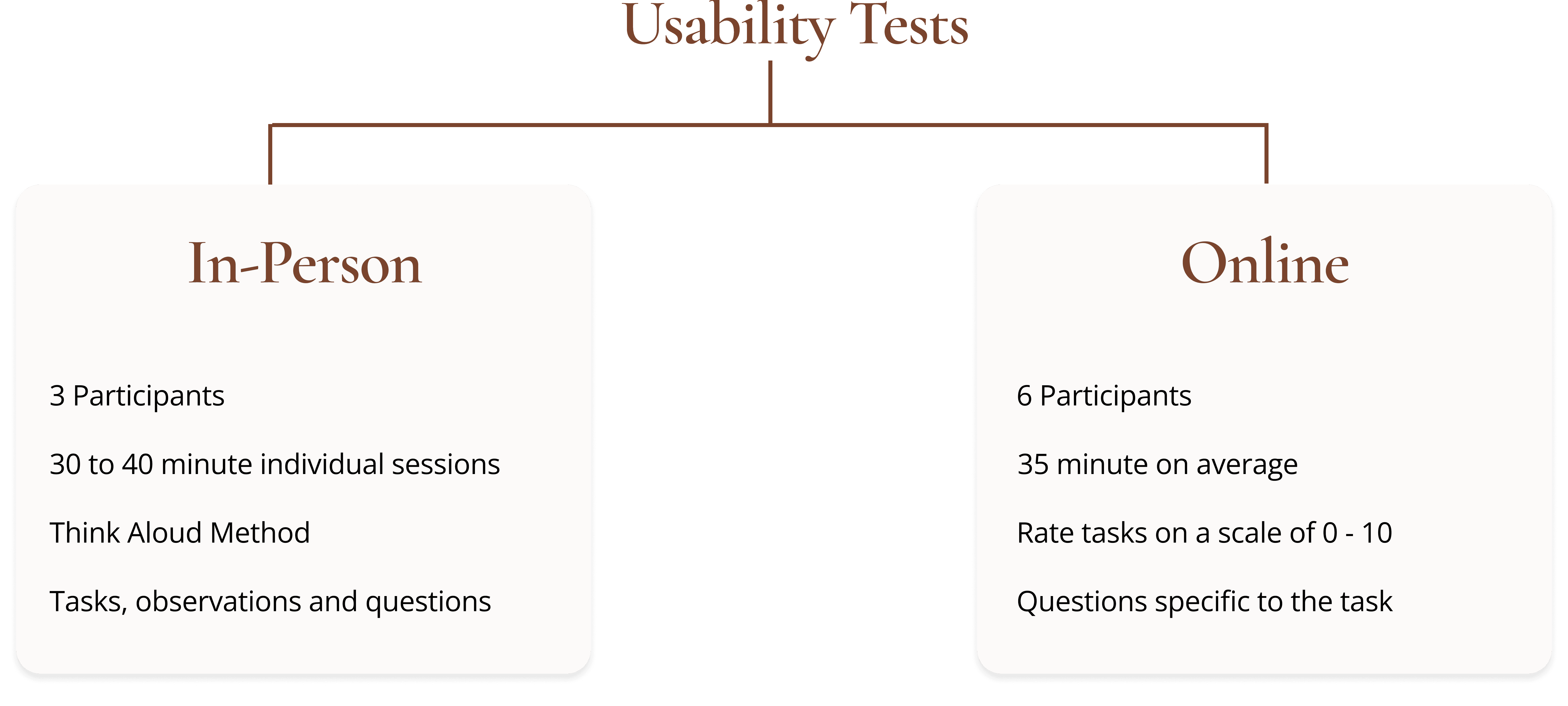
Pain Point
Features like “Posts/ Questions/ Stories” were difficult to understand immediately
Pain Point
Features like “Posts/ Questions/ Stories” were difficult to understand immediately
Pain Point
Features like “Posts/ Questions/ Stories” were difficult to understand immediately
Observation
Participants associated terms with existing social media platforms
Observation
Participants associated terms with existing social media platforms
Observation
Participants associated terms with existing social media platforms
Suggestion #1
Curated prompts by admins to facilitate discussions
Suggestion #1
Curated prompts by admins to facilitate discussions
Suggestion #1
Curated prompts by admins to facilitate discussions
Suggestion #2
Could be opened up for non-TCKs who have partners or children who are TCKs to help them understand TCK life better
Suggestion #2
Could be opened up for non-TCKs who have partners or children who are TCKs to help them understand TCK life better
Suggestion #2
Could be opened up for non-TCKs who have partners or children who are TCKs to help them understand TCK life better
Rating
Average rating of 8.3/10 for both UI and UX of the app
Rating
Average rating of 8.3/10 for both UI and UX of the app
Rating
Average rating of 8.3/10 for both UI and UX of the app
Quoting Participant 9
“I would love to connect with people like me, please make this a reality”
Quoting Participant 9
“I would love to connect with people like me, please make this a reality”
Quoting Participant 9
“I would love to connect with people like me, please make this a reality”
TCKs only.
Since this app is only for Adult Third Culture Kids, you can check if you are one, just in case you are not sure.
TCKs only.
Since this app is only for Adult Third Culture Kids, you can check if you are one, just in case you are not sure.
TCKs only.
Since this app is only for Adult Third Culture Kids, you can check if you are one, just in case you are not sure.
Interactions
Users can safely interact with a pool of others who may go through the same challenges as they do
Interactions
Users can safely interact with a pool of others who may go through the same challenges as they do
Interactions
Users can safely interact with a pool of others who may go through the same challenges as they do
Nearby
Users can sign up for a nearby event through this intuitive map interface
Nearby
Users can sign up for a nearby event through this intuitive map interface
Nearby
Users can sign up for a nearby event through this intuitive map interface
Add other ATCKs
Users can see profiles and activities of other ATCKs and add them to their network
Add other ATCKs
Users can see profiles and activities of other ATCKs and add them to their network
Add other ATCKs
Users can see profiles and activities of other ATCKs and add them to their network
Organise your own event
Users can organise their own event and post it on the app, allowing others to sign up
Organise your own event
Users can organise their own event and post it on the app, allowing others to sign up
Organise your own event
Users can organise their own event and post it on the app, allowing others to sign up